Carced News
VW's Mission Efficiency Just Beat Its Own Production Car By Over A Mile Per kWh — Here's How
Earlier this week this was just a teardrop-shaped teaser. Now VW has receipts: a real 794-mile road trip, a 0.158 drag coefficient, and range numbers that make the production ID. Polo look thirsty by comparison.

The Teaser Undersold This. The Real Numbers Are Wild
A couple of days ago, all we had on VW’s Mission Efficiency was a silhouette and a promise of a “record-setting journey.” Now VW has actually done the drive, and the numbers are legitimately impressive enough that this deserves its own look, separate from the original teaser.
The Shape Is Doing Serious Work
A 0.158 drag coefficient. For comparison, the Lucid Air — widely regarded as the most aerodynamically efficient production car currently on sale — sits at 0.197. That’s not a marginal gap; that’s VW’s concept meaningfully out-slicking the best aero engineering the EV industry currently has to offer, using a teardrop-shaped 2+2 coupe body with runway-model-skinny 155-section tires.
It’s An ID. Polo Underneath, And That’s The Impressive Part
Strip away the carbon bodywork and this is fundamentally the new electric ID. Polo — a 133 hp motor, front-wheel drive, a 9-second 0-62 mph time that’s not trying to impress anyone on paper. The battery is the production Polo’s 52 kWh pack, tweaked to 54 kWh by trimming the lifespan safety buffer. None of this is exotic hardware. It’s a hatchback in a very committed costume.
And yet: a stock Polo with that 52 kWh pack manages around 5.4 miles per kWh. The Mission Efficiency recorded 6.48 mpkWh — over a full mile per kWh better, purely from aerodynamics and weight savings, with the same fundamental powertrain underneath.
The Real-World Proof Is What Makes This Credible
VW didn’t just claim a lab number. It drove the thing 794 miles from Wolfsburg to Vienna and got the equivalent of 412 miles of range from a single charge. That’s the detail that separates this from a typical concept-car efficiency claim — it’s a demonstrated result on real roads, not a rolling-road extrapolation. There’s also a 370W photovoltaic panel built into the glass, reportedly worth up to 18.6 miles of range per day in good sun. That’s a genuinely meaningful daily top-up for anyone who parks outside.
Junking The Brake Fluid Is A Small Detail With Big Implications
Electro-mechanical rear brakes instead of hydraulic lines and fluid, an aluminum structure topped with CFRP composite doors, trunk, and hood, and — in a move that’ll either delight or annoy you depending on your relationship with your phone — no infotainment screen or speakers at all. The idea is your phone and a Bluetooth speaker cover it. That’s a genuinely bold packaging decision for a concept, and while I doubt it survives to production as-is, the fluid-free rear brake setup feels like exactly the kind of detail that quietly migrates into a future ID model.
The XL1 Comparison Isn’t Just Nostalgia
Ferdinand Piëch conceived the original XL1 as the efficiency-obsessed counterpart to his Bugatti Veyron’s power obsession — carbon body, carbon brakes, gullwing doors, and a tiny two-cylinder diesel hybrid making just 68 hp. It was slow on paper (12.7 seconds to 62 mph) but reportedly genuinely fun to drive, thanks to unassisted steering and race-car-level chassis balance. VW actually sold 250 of them.
The Mission Efficiency won’t have that same tactile, stripped-down feel — ID. Polo underpinnings just aren’t built for that kind of driver engagement. But its mission arguably matters more right now. The XL1 was a curiosity in an era when EV range anxiety wasn’t the industry’s central problem. The Mission Efficiency is tackling that exact problem head-on, using hardware that’s already close to production reality.
My Take
This is the rare concept car that backs up its own hype with a genuine road trip and real numbers, rather than asking us to take a lab figure on faith. If even a fraction of what’s here — the aero tricks, the fluid-free brakes, the panel efficiency gains — makes it into a future production EV, that’s a meaningfully more efficient ID lineup down the line. VW selling 250 XL1s proved there’s a market for efficiency-as-halo-car. I wouldn’t be shocked if the Mission Efficiency, or something very close to it, eventually gets the same treatment.
Would you want a production version of something like this, even with the driving experience trade-offs that come with chasing efficiency this hard? Let me know where you land.
More Carced news
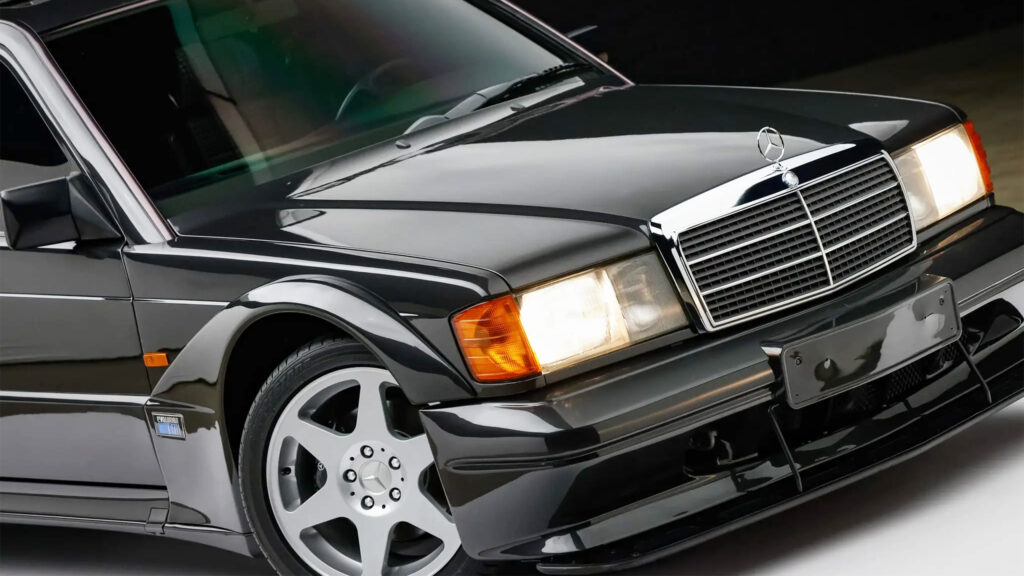
You Can Buy HWA's $760K New 190E Evo II, Or The Real Thing For Less — And That's A Genuinely Hard Choice
A restomod exists to solve the problem of an original being too rare, too fragile, or too expensive to actually use. This time, the original might be the cheaper option.
Read article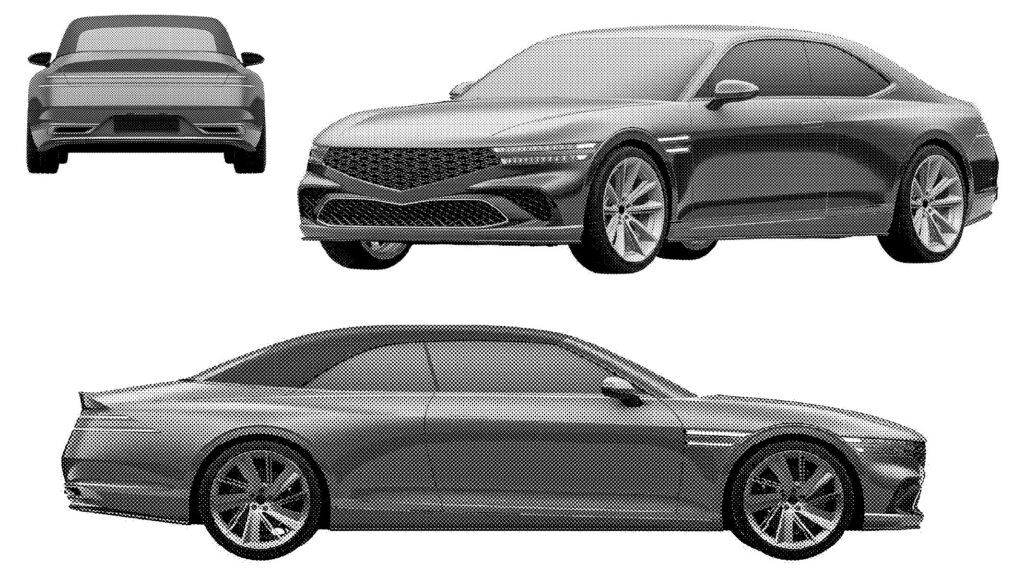
Genesis Just Patented The G90 Coupe And Convertible, And That's More Than Just Paperwork
A design patent isn't a production announcement, but Genesis wouldn't bother protecting a design it had no intention of ever building — and having seen the Convertible in person, I understand why they'd want to.
Read article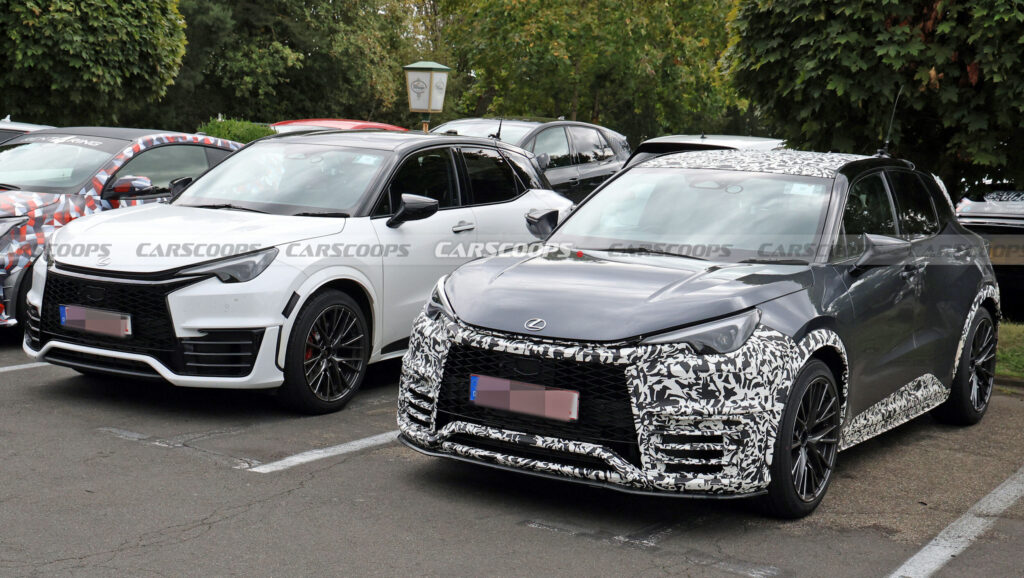
Lexus Is Building An Even Hotter LBX, And Carbon Fiber Is Doing All The Talking
The existing LBX Morizo RR already had a manual gearbox and GR-derived power. This new version's whole mission is shedding weight, and it's doing it with carbon fiber almost everywhere.
Read article
VW Wants $149 A Year To Turn Your Parked Car Into A Game Console, And I'm Weirdly Okay With It
Yet another automotive subscription fee sounds exhausting on principle. But this one is actually solving a real, specific dead-time problem — and it's bundled with features people already pay for anyway.
Read article