Carced News
Rolls-Royce Will Test The Nightingale's Trunk 15,000 Times Before You Even Get The Keys
150 years' worth of trunk openings, tested before a single customer touches the car. That's what $9.5 million actually buys — not the object itself, but the obsessive certainty that it will work perfectly, forever.

This Is What Testing Looks Like When Money Genuinely Isn’t The Constraint
Most cars get validated through a mix of simulation, accelerated-life testing, and a reasonable number of real-world cycles on wear items. Rolls-Royce’s approach to the Nightingale’s trunk mechanism blows straight past “reasonable” — 15,000 full open-and-close cycles before a single customer ever touches the car, on a component most owners will interact with maybe twice a week.
The Math Behind That Number Is Genuinely Absurd
Assuming an owner uses the car once a week and opens the trunk twice each time (itself a generous usage estimate for a $9.5 million toy), Rolls-Royce has effectively tested this mechanism for the equivalent of roughly 150 years of realistic use. That’s not durability testing in the conventional sense — that’s testing designed to guarantee the mechanism will outlive not just the original owner, but likely several generations of subsequent ownership.
The “Piano Boot” Detail Is The Actual Engineering Challenge
This isn’t a standard trunk lid — it’s a “piano boot” that opens sideways like the lid on a baby grand, integrated into a boat-tail rear end on a car measuring a staggering 226.8 inches long while seating only two people. A conventional hinge mechanism is relatively simple to validate at scale; a sideways-opening panel integrated into a sculpted boat-tail design is a considerably more complex mechanical and structural engineering problem, which likely explains why Rolls-Royce felt the need to test it this exhaustively.
The Rest Of The Testing Program Is Equally Uncompromising
Beyond the trunk mechanism, Rolls-Royce plans 350 weeks of testing across Mediterranean twisty roads, snowy Arctic Circle routes, North African deserts, and mountains reaching 9,020 feet. Named Nightingale after Henry Royce’s own villa — which he and his team used as a real testing base decades ago — the program deliberately recreates that historical rigor for a modern coachbuilt car, even though the vast majority of owners will never subjectively notice the difference between “extensively tested” and “tested at this exact obsessive level.”
The Absurdity Is Kind Of The Point
At a length-to-seating ratio that makes even the most wasteful 1970s American land yachts look space-efficient, the Nightingale isn’t trying to be a practical car — it’s a design statement inspired by luxury watercraft, limited to just 100 units globally, kicking off Rolls-Royce’s new Coachbuild Collection series. Testing a two-seat, $9.5 million convertible’s trunk mechanism 15,000 times isn’t really about the trunk. It’s about signaling, in the most literal and repetitive way possible, that nothing about this car is being left to chance.
My Take
At this price point, the actual product isn’t the car — it’s the certainty. A buyer spending $9.5 million (before personalization) isn’t purchasing transportation; they’re purchasing the guarantee that every mechanism, down to the trunk latch, has been stress-tested far beyond any plausible real-world demand. That’s a genuinely different value proposition than performance or even styling, and it’s the kind of obsessive over-engineering that only makes commercial sense at the absolute top of the luxury market. Whether or not you’ll ever cross paths with a Nightingale, it’s a fascinating look at what “no expense spared” actually means in practice.
Does this level of obsessive testing genuinely add value for an ultra-luxury buyer, or is it more about the marketing story than anything a customer would ever perceive in daily use? I lean toward believing it’s mostly the latter — but I respect the commitment either way.
More Carced news
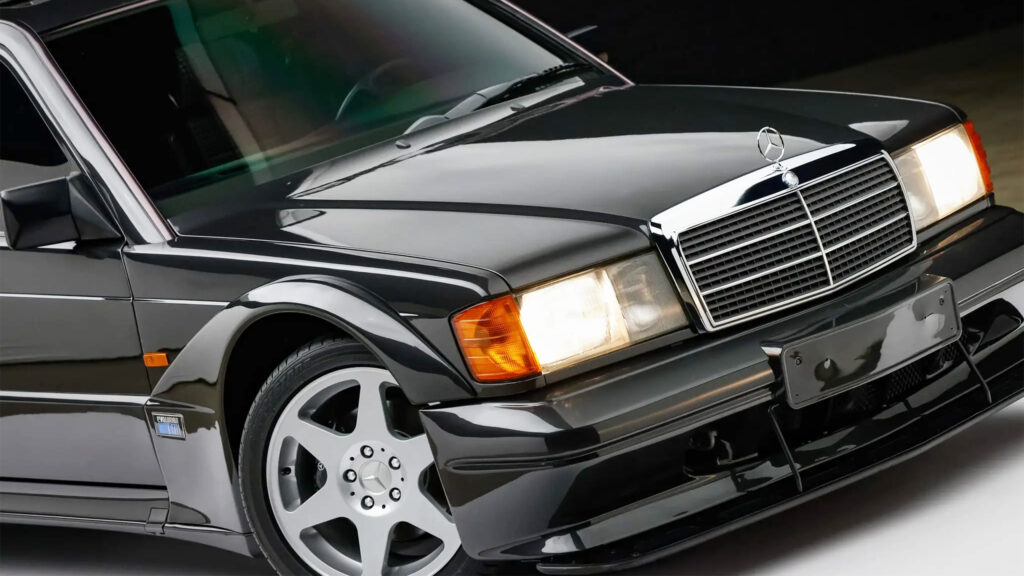
You Can Buy HWA's $760K New 190E Evo II, Or The Real Thing For Less — And That's A Genuinely Hard Choice
A restomod exists to solve the problem of an original being too rare, too fragile, or too expensive to actually use. This time, the original might be the cheaper option.
Read article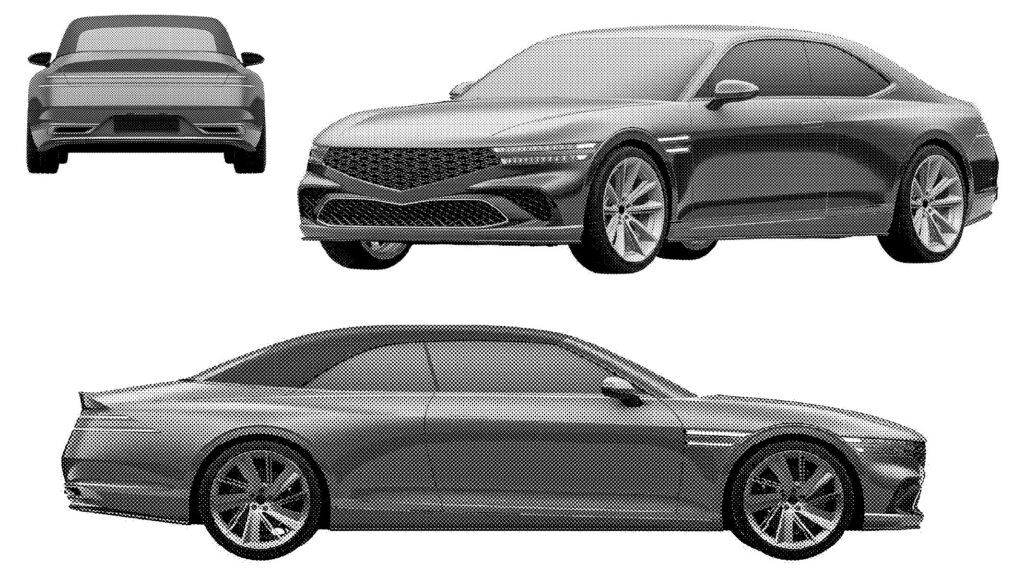
Genesis Just Patented The G90 Coupe And Convertible, And That's More Than Just Paperwork
A design patent isn't a production announcement, but Genesis wouldn't bother protecting a design it had no intention of ever building — and having seen the Convertible in person, I understand why they'd want to.
Read article
Lexus Is Building An Even Hotter LBX, And Carbon Fiber Is Doing All The Talking
The existing LBX Morizo RR already had a manual gearbox and GR-derived power. This new version's whole mission is shedding weight, and it's doing it with carbon fiber almost everywhere.
Read article
VW Wants $149 A Year To Turn Your Parked Car Into A Game Console, And I'm Weirdly Okay With It
Yet another automotive subscription fee sounds exhausting on principle. But this one is actually solving a real, specific dead-time problem — and it's bundled with features people already pay for anyway.
Read article